The 3 Things That Completely Changed My Life (Trust Me, I Was a Hot Mess Express.
Sep 17, 2026“Honestly, it already feels like we’ve already been separated…so we might as well just get divorced.”
I sat across from my husband at our kitchen table, trying to keep the tears welling in my eyes from spilling down my cheeks.
His words hit me like a punch directly to the gut, which is crazy, I know—because after a pep talk from my coworker and two shots of tequila, I was the one who had finally worked up the courage to tell him we should separate.
I just couldn’t do it anymore. We were sleeping in separate rooms and putting on a ruse of happiness in public for our friends. No one knew we hadn’t slept together in a year. No one knew I deliberately stayed out until 11 p.m. most nights so I wouldn’t have to see him. No one knew that on the nights we did have to spend together, I would drink two bottles of wine just to pass out on the couch so I wouldn’t feel pressured to be intimate.
And I just couldn’t do it anymore. I knew we had to separate, but what I didn’t know was how disposable and replaceable I would feel hearing him just go straight for the divorce. Even though that’s what I wanted too. Confusing times.
At that point in my life, I was a literal hot mess express. Trapped in an unhappy marriage, working a job I hated, carrying around years of unprocessed grief, drinking way too much to numb the pain I was trying to avoid, and blaming pretty much everyone and everything around me for why I was unhappy.
That night at my kitchen table started a massive unraveling. I got divorced. I left my career as a dental hygienist and finally went for my dreams of being in full-time fitness. I moved. And eventually, I started doing something I had never really done before: I started trying to understand myself.
Ten years later, my life looks almost unrecognizable from the one I was living then. But when I think about what actually changed it, it wasn't getting divorced, changing careers, moving, starting businesses, or any of the other big external changes.
Those were outcomes. The real change happened internally.
Because you can change your circumstances without understanding yourself and eventually find yourself recreating the same patterns in a different setting.
Understanding yourself is what gives you the ability to choose differently.
The first step of completely changing my life: The brain – understanding your thoughts. (Just because you think it doesn't mean it's true.)
This was the first revelation that changed everything for me.
I had never really thought about the fact that I could think about my thoughts. I assumed that if something showed up in my head, there must be some truth to it.
I'm never going to get that opportunity. I can't do that. They're probably mad at me. I'm stuck. This always happens to me.
We have this constant stream of consciousness running through our heads all day long. In The Untethered Soul, it's described as your inner roommate, which I love because imagine if an actual roommate followed you around saying some of the things you say to yourself.
“You're going to suck at that. They don't like you. You're never going to get picked.”
You'd kick them out of brunch in a second. Jail. Immediate jail!
But because the voice is coming from inside our own head, we tend to assume it knows what it's talking about.
Learning that I could hear a thought without automatically believing it was one of the first ways I started taking my power back. Then I started noticing something else: my words.
If you have no idea what you're thinking all day, listen to what comes out of your mouth.
“I need to…”
“I'll never…”
“I can't…”
“This always happens to me.”
I think of our words almost like magical spells. Not because saying “I'm rich” three times is going to make a pile of money appear on your kitchen counter, but because the language you repeatedly use directs your attention and reinforces the story you're telling yourself about your life.
I started asking myself: Is that actually true? Do I know that, or am I afraid of that? Is there another way of looking at this? Is the way I'm talking about my life helping me create what I want—or reinforcing what I don't?
So I started speaking kindly to myself. And I don’t mean in a toxic positivity way. Terrible things happen. Grief is real. Disappointment is real. Sometimes circumstances just suck.
Mindset work isn't pretending reality is different. It's recognizing that you have a relationship with reality through the way you think about it.
Understanding my brain taught me that I couldn't control every thought that appeared, but I could become conscious of which ones I chose to participate in.
But then I discovered that I could understand my thoughts and still find myself doing the same things over and over again.
That's where behavior came in.
The first step of completely changing my life: Behaviors – there's a reason you keep doing that thing.
In 2018, Instagram served me a BuzzFeed quiz asking which Harry Potter house I belonged to. Obviously, I took it. Gryffindor.
The next quiz was, “What's your Enneagram?”
Ten minutes later, the internet had read me to filth. (So much, I created an entire life coaching platform around it.) Literally – to absolute filth.
I'm an Enneagram Type 7, and one of the biggest patterns associated with a 7 is avoiding pain and discomfort. Suddenly, behaviors I had always written off as “that's just how I am” started making sense.
For example, I hated confrontation. Instead of telling someone no and risking disappointing them, I'd say yes. Then I'd say yes to someone else. Sometimes those two yeses were for the exact same time.
Now I've double-booked myself, and guess what double-booking eventually requires? The confrontation I was trying to avoid in the first place — except now I'm canceling on someone 20 minutes before brunch. Damn, you really do have to face the music at some point don’t you…always best to wait until the last minute, right? That’s how you can feel guilty for the shortest amount of time! (Yes, in my mind, this made perfect sense.)
Once I understood the patterns underneath my behaviors, I could finally see the cycle.
And this is why understanding your behavior is so important: the things you repeatedly do usually aren't random.
Maybe you procrastinate because starting creates the possibility of failing. Maybe you people-please because someone's disappointment feels threatening. Maybe you stay constantly busy because slowing down brings up feelings you'd rather not feel.
Instead of asking, “Why do I keep doing this?” with judgment, ask it like you actually want the answer.
What am I getting from this behavior? What am I avoiding? What am I protecting? What feels scary about doing something differently?
For me, the Enneagram gave me language for those patterns. For someone else, that awareness might come through therapy, coaching, journaling, or another framework. The tool isn't the important part. Seeing the pattern is.
“Until you make the unconscious conscious, it will direct your life and you will call it fate.” – Carl Jung
If you don't know a pattern exists, it can make choices for you all day long while you call those choices your personality, your circumstances, your bad luck, or “just how I am.”
But once you see it, you have another option.
For years, Brain + Behavior were the foundation of my work. I built an entire coaching practice around mindset and behavior change, and I saw huge transformations in myself and my clients.
But I also noticed something I couldn't explain: sometimes, if we stopped actively doing the work, the old patterns came back.
There was another piece missing.
The third step of completely changing my life: Body: HOT TAKE: your mind isn't actually the boss.
About three years ago, I started studying somatics, and it completely changed the way I thought about personal development.
Somatic work, in a nutshell, is a body-based approach to working with your emotions and experiences. Instead of only asking, “What am I thinking about this?” you also start asking, “What is happening in my body as I experience this?” And you pay attention to the one tool that never leaves your side: your body.
Maybe your chest tightens. Your stomach drops. Your shoulders creep toward your ears. Your jaw clenches. You hold your breath. Maybe you suddenly want to cry, shake, move, or scream.
But do you let yourself? Do you feel the painful ball in your throat suddenly form in your thoat when your boss calls you out in front of everyone in a meeting? Do you let the warm tears forming in your eyes fall down or do you hold them back?
I can’t let them see me cry.
So what do you do? You hold it in. You don’t let the energy escape…so you just stuff it down. Where…does it go?
Into your body. And it doesn’t feel good.
Somatic work helped me understand the difference between intellectually understanding an experience and allowing myself to actually experience what was happening in my body.
Instead of immediately trying to fix, reframe, analyze, suppress, or distract myself from a feeling, I learned to notice it. Where do I feel this? What happens if I stop trying to make it go away? What does my body naturally want to do?
That work eventually led me to become a Somatic Healing Practitioner and develop the somatic movement practice I now teach through the Meg Ellis Method. It also made me rethink something I had taught for years: mindset isn't everything.
Yes, after years of preaching that if you changed your mind you could change anything in your life…I realized I was off the mark.
Your mind can know you're safe while your body is still bracing. Your mind can know this person isn't your ex while your body reacts to something that feels familiar. You can tell yourself a beautiful new thought, but if your body is having a completely different experience, sometimes the thought alone isn't enough.
That's why the body became the third piece. And they all work together.
Your brain helps you notice the story you're telling yourself. Your behavior helps you notice the patterns influencing your choices. And your body helps you notice what you're actually experiencing underneath both.
That’s the Body • Brain • Behavior approach.
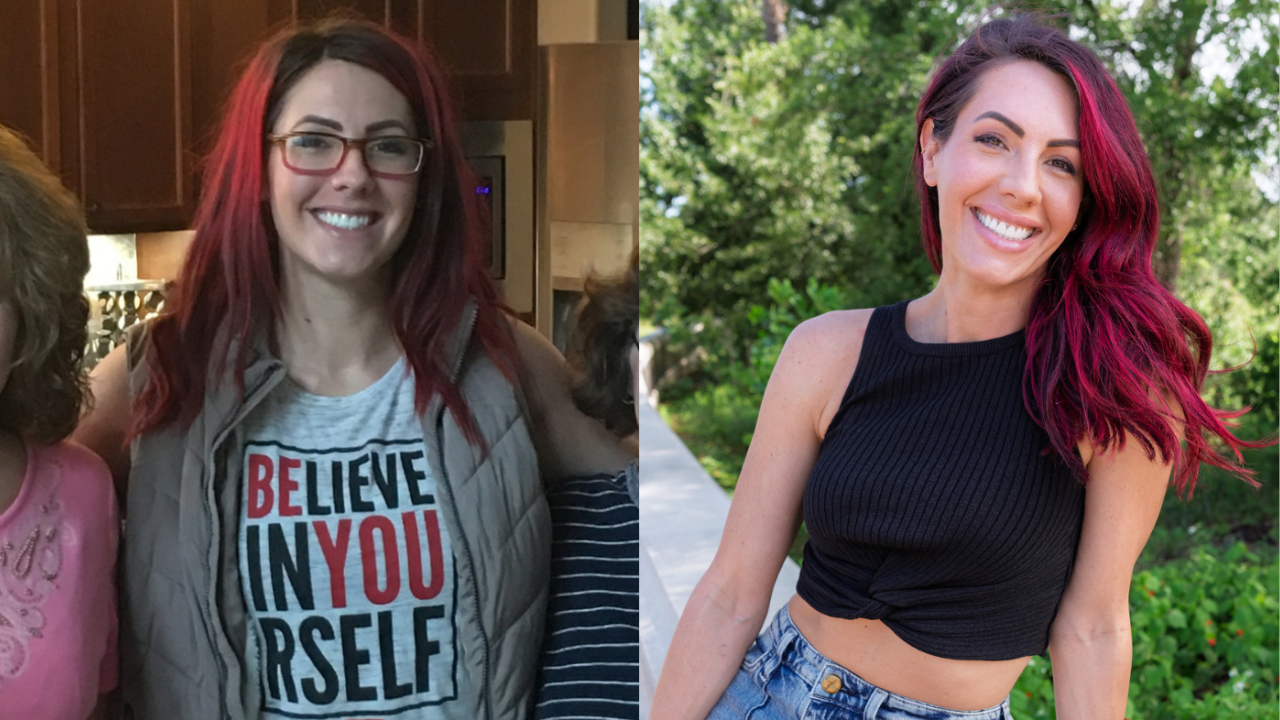
And this is what I wish I could explain to the woman sitting at that kitchen table ten years ago: she wasn’t missing some secret formula for creating a better life. She simply didn’t understand herself yet.
Learning to understand myself — my thoughts, my patterns, my body — opened the door for me to truly learn how to love myself. And more than any job, relationship, accomplishment, or external change, that is what changed my life.
The more you understand yourself, the easier it becomes to have compassion for yourself, trust yourself, and ultimately love yourself.
I hope you stick around for more, as I share what has helped me transform from victim mode to creator mode, where I am truly creating my absolute Best Life Ever. And it’s not about fixing yourself or being in the constant struggle of self-improvement.
Remember…you’re not here to fix yourself. You’re here because you love yourself.
And if loving yourself feels strange, or foreign, or complicated…I got you.
Want the full story? Listen to Create Your Fate podcast episode 250: The 3 Things That Completely Changed My Life – available on Apple, Spotify, or wherever you listen to your podcasts.
And of course, be sure to subscribe and follow along…much more to come!
Enlighten your inbox!
New courses, motivation, and special offers delivered right to your inbox.
We hate SPAM. We will never sell your information, for any reason.